Today marks the 250th anniversary of America. It is certainly a monumental occasion. What happened to those who signed their names to the Declaration of Independence? After all, that was an act of treason to the British Empire.
As we celebrate 250 years, let’s remember the price these men (and all other Americans who fought in that war) gave for the country we live in today. Then, we should look at our state and federal officials, and determine if they stand for what the Founders believed in – and died for.
I’m going to start with signers from my home state of Virginia.
Carter was a plantation owner, and his farms were destroyed by the British during the war. He was not originally on board with the Patriots, in fact, speaking against Patrick Henry and criticizing John Adams. However, he realized independence was necessary. Many investments that he made for the Patriot cause collapsed, sending him into financial ruin.
Benjamin was heavy into politics, serving in the VA House of Burgesses until Governor Dunmore dissolved it. Dunmore then offered to have Benjamin serve in the executive council, but Benjamin was becoming more displeased with the British and declined. He helped write the Colony’s protest of the Stamp Act, although he wasn’t on Patrick Henry’s side. He was a member of the First Continental Congress, worked on the Articles of Association, and even read Jefferson’s draft to the delegates July 1st. He worked on the Bill of Rights, became governor of Virginia in 1781, re-elected twice, and served with the Virginia House of Delegates until he passed in 1791 from gout.
Thomas managed to upset Governor Dunmore (not surprising) with his pamphlet of “A Summary View of the Rights of British America”, which he sent to the king. He essentially said America was tied to the king by their own choice and only if benefits were mutual. Dunmore threatened high treason. The Virginia Assembly was on his side and Dunmore eventually relented. As we know, Thomas wrote the Declaration of Independence at 33 years old. Jefferson tried to convince John Adams to write, but John replied:
“Reason first – you are a Virginian, and a Virginian ought to appear at the head of this business. Reason second – I am obnoxious, suspected, and unpopular. You are very much otherwise. Reason third – you can write ten times better than I can.”
Northern delegates (who were into the Atlantic slave trade), South Carolina, and Georgia delegates removed the section Jefferson drafted attacking slavery (if only Monticello would look at Jefferson’s own history…another topic for another day).
Jefferson was nearly captured by Benedict Arnold and his troops when they took Richmond in 1781. He was nearly captured again by Banastre Tarleton in Charlottesville, VA. He was then ordered to an investigation of his lack of military precaution, but was vindicated by the House of Delegates.
He became Secretary of State, Vice President, and President for two terms. He performed the Louisiana Purchase, the Embargo Act, sent Lewis and Clark on their way, and founded the University of Virginia. He was running out of money, and lived frugally, but could not keep up. He sold his private library – over 10,000 books to the Library of Congress, essentially providing the bulk of their repository. He became very ill, and passed the same day as John Adams, on the 50th anniversary of July 4 – 200 years ago today.
The Lee family is very influential in this nation’s history. Francis and his brother, Richard were both signers of the declaration, and their second cousin led the Confederate army – Robert E Lee. Francis was a delegate of the Second Continental Congress. He also helped with the Articles of Confederation, being one of 16 men who signed both documents. Francis was chair of a Congressional committee to support the army in 1777, during the winter everyone remembers for Valley Forge. In fact, Pennsylvania decided to not send help and ignored the pleas from Congress. So, Francis wrote the governor, and said that the Continental commissary would pay the PA farmers for food, and even though it was unconstitutional, it worked. Francis stepped away from politics, leaving the VA House of Delegates in 1781.
Richard was elected for the House of Burgesses, and he fought against transporting slaves to Virginia. He did become a tax collector just in time for the Stamp Act, getting a first-hand view of what taxation without representation really meant. He was later censured over this, but he defended himself and moved on. He lost four fingers in a goose hunting accident. As head of the Virginia delegation, Richard made a motion that John Adams seconded:
“That these United Colonies are, and of right ought to be, free and independent States, that they are absolved from all allegiance to the British Crown, and that all political connection between them and the State of Great Britain is, and ought to be, totally dissolved.”
Richard, like Francis, also signed the Articles of Confederation. Richard, however, was blamed and accused of public office misuse, and so he requested a formal investigation, where he was later acquitted. His home and family fell under attack by British troops numerous times, requiring a militia to help protect them.
“I am at present lamed by my horse falling on me in a late engagement with the enemy who landed under cover of heavy cannonades from three vessels of war upon a small body of our militia were posted,” wrote Lee to his friend Samuel Adams April 1. “After a small engagement we had the pleasure to see the enemy, tho superior in numbers, run to their boats and precipitately reembark having sustained a small loss of killed and wounded.”
He became the leader of the Continental Congress in 1784, helped Virginia adopt the Bill of Rights, and fought to protect liberty.
I actually attended Thomas Nelson Community College (part of VA Community College System) for a brief time, before it became renamed to Virginia Peninsula Community College. It’s another post for another day, but people had things named after them because they did influential things. Let me share what Thomas did for this country.
When Governor Dunmore dissolved the House of Burgesses for condemning the closing of the Port of Boston, Thomas spent his own money to send necessary supplies to Boston, arranging a Yorktown tea party, and helping throw chests of tea into the York River. Now that’s a tea party I’d attend!
He served in both the First and Second Continental Congresses. He led the Virginia militia as the Virginia Legislature was being pursued by the British calvary in Albemarle County (the county next to where I grew up). They had joined with the Marquis de Lafayette as they moved across the Blue Ridge Mountains to Staunton, Virginia (20 minutes from where I grew up!). He was informed in his militia camp that he was the third governor of Virginia in 1781*.
During the Siege of Yorktown, the British had taken his seized his home and were using it as a command center. So, leading the Virginia militia he offered five guineas to the first man who hit his house with their artillery. He personally financed the war effort in Virginia, and was never compensated.
* He became governor of Virginia in 1781. Now, you may think I have a typo, as Benjamin Harrison was also governor that same year. Nelson became very ill and had to resign his position. He died in poverty. And they dared to rename the college to become “more inclusive”.
George took Governor Dunmore’s place in the First Continental Congress after he had to run from Williamsburg because he took everyone’s guns and ammunition from the magazine. George asked his fellow delegates:
“In what character shall we treat? As subjects of Great Britain? As rebels? Why should we be so fond of calling ourselves dutiful subjects? We must declare ourselves a free people.”
He was elected Speaker of the VA House of Delegates, and remained at his home during the war in Virginia, nearly becoming captured numerous times.
George became the first law professor at William & Mary, was appointed chancellor of Virginia in 1778, and poisoned by his grand-nephew in 1806. Why was he poisoned? Turns out, after being so nice to his grand-nephew, he found out his grand-nephew was stealing from him. So, he remedied the will, leaving him half and one of his freed slaves half. His grand-nephew found out, and killed both George and his freed slave. Before he was killed, he had completely written his grand-nephew out of the will entirely. His home is now part of the Langley Research Center.
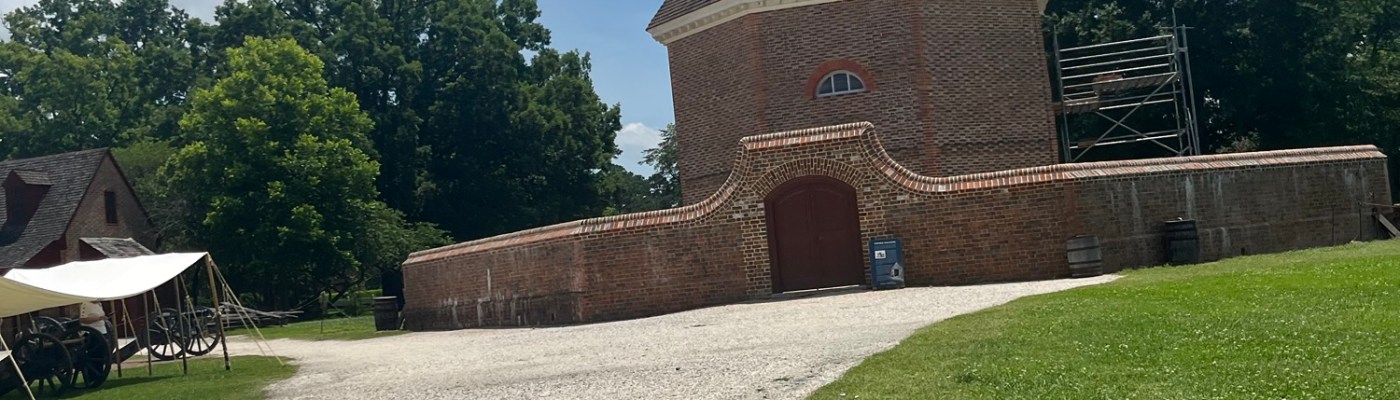
This post is long enough just encompassing the signers from Virginia. I think we’ll spend the rest of July covering the other states. I encourage you to click on the links to learn more about these men, as I could not possibly include all of the information about them here. Remember that they were willing to give everything for this country, with many of them dying in poverty due to financing the war effort. I thought it fitting the image for this post I took in Williamsburg, VA. It’s the very magazine Governor Dunmore stole from.
If you are not 100% sure that you’ll go to Heaven when you die, now is the time to repent and put your trust in Jesus Christ. If you have any questions or doubts about your salvation, click here to learn how you can be saved!
Let me know if you have any comments or suggestions below or you can contact me here! I love hearing from you!
Discover more from Back To Stable Hill
Subscribe to get the latest posts sent to your email.

