Tomorrow is the 250th anniversary of the signing of the Declaration of Independence. We’ve already discussed signers from Virginia, Pennsylvania, Maryland, North Carolina, and South Carolina, Connecticut, Delaware and Georgia. We’ve got about one more installment in this series after today. Today, we’ll look at the signers from Massachusetts and New Hampshire. I personally think Virginia and Massachusetts were the main rabble-rousers of the Revolutionary War.
Massachusetts
You likely know John to be the first Vice President of the United States and also a President. His son, John Quincy, also was President, and John lived to see it. John was a lawyer in Boston, and was quickly involved in the Patriot cause. He served in the First Continental Congress, as well as the Second. John served on the committee for drafting the Declaration, and urged Jefferson to do so, as “a Virginian ought to appear at the head of this business.” On July 1st, during the discussion of the Declaration, John Dickinson from Pennsylvania opposed the adoption of the Declaration. John waited for someone to argue, but when no one did, John Adams stood up and defended the need for independence. He talked for nearly an hour, when he was interrupted by the New Jersey delegates who were late. When asked to repeat what he’d been saying so they could get caught up, John declared: why should he do so? Was he an actor there to entertain? Or a gladiator, there to do battle?
Edward Rutledge urged him to do so, so John Adams relented and spoke for nearly another hour. After the Declaration was successfully voted in the next day, John wrote to his wife, Abigail:
The second day of July 1776 will be the most memorable epoch in the history of America. I am apt to believe that it will be celebrated by succeeding generations as the great anniversary festival. It ought to be commemorated as the Day of Deliverance by solemn acts of devotion to God Almighty. It ought to be solemnized with pomp and parade, with shows, games, sports, guns, bells bonfires, and illumination from one end of this country to the other from this time forward forever more. You will think me transported with enthusiasm, but I am not. I am aware of the toil and blood and treasure that it will cost us to maintain this Declaration and support and defend these states, yet through all the gloom I can see the ravishing light and glory. I can see the end is worth more than all the means, and that posterity will triumph in this day’s transactions, even although we shall rue it, which I trust to God we shall not.
John signed the Declaration on August 2nd, 1776 and continued to practice law and politics until his death on July 4, 1826, just a couple hours after Thomas Jefferson passed.
Sam was probably the most notorious rabble-rouser for the Revolutionary War, and the second cousin of John Adams. (Unrelated, but I do recommend you watch the Sons of Liberty starring Ben Barnes, aka Prince Caspian). Sam quickly gained power in the colonial legislature, and those who followed him were called the Boston Sons of Liberty. The day after the Boston Massacre, a committee was chosen to call on Governor Hutchinson, asking that he remove troops immediately removed from the town. The governor responded that he wasn’t in charge of the troops. Sam strongly advised (threatened?) him to remove them anyway, and eventually the governor relented. Sam had money issues, and England tried numerous attempts to bribe him, but Sam would never accept. Governor Hutchinson even responded to Britain: “Such is the obstinacy and inflexible disposition of the man, that he never can be conciliated by any office or gift whatever.”
Sam instigated the Boston Tea Party, and when Hutchinson closed the port in retaliation, the colonies resisted six weeks later by boycotting the British trades. Governor Gage in 1774 sent Colonel Fenton to warn Samuel that he was in great danger of being sent back to England for trial of treason. Fenton suggested Samuel change his political stance, and could even elevate him out of poverty. Samuel responded (I imagine in a fierce tone):
“Go tell Governor Gage, that my peace has long since been made with the King of kings, and the advice of Samuel Adams is to no longer insult the feelings of an already exasperated people.”
Governor Gage then issued a proclamation: “I do hereby in his majesty’s name, offer and promise his most gracious pardon to all persons, who shall forthwith lay down their arms, and return to the duties of peaceable subjects: excepting only from the benefits of such pardon, Samuel Adams, and John Hancock whose offenses are of too flagitious a nature to admit of any other consideration but that of condign punishment.”
Samuel Adams and John Hancock were being watched, and Gage hoped to capture both on the night of April 18, 1775. They were staying with Reverend Jonas Clark in Lexington when Paul Revere rode to warn them the British were on their way. Adams and Hancock escaped, the British arrived, and the Battle of Lexington began. Sam was elected to the First Continental Congress and remained a member until 1781. He knew there was no chance of reconciliation”
“I am perfectly satisfied of the necessity of a public and explicit declaration of independence. I cannot conceive what good reason can be assigned against it. Will it widen the breach? This would be a strange question, after we have raised armies, and fought battles with the British troops; set up an American navy; permitted the inhabitants of these colonies to fit out armed vessels, to capture the ships, &c. belonging to any of the inhabitants of Great Britain; declaring them the enemies of the United Colonies; and torn into shivers their acts of trade, by allowing commerce, subject to regulations to be made by ourselves, with the people of all countries, except such as are subject to the British king. It cannot after this be imagined that we consider ourselves, or mean to be considered by others, in any other state, than that of independence.”
Sam Adams voted for and signed the Declaration of Independence. He served on the committee to write the Articles of Confederation, as well as served as Lieutenant Governor and Governor of Massachusetts. He died at 82 years old, never getting out of his financial struggles, but always being a strong defender of liberty.
Elbridge attended Harvard, and his master’s thesis was on how the colonies should resist the Stamp Act. Elbridge lived a couple towns away from Boston, so when Parliament shut the port down, Elbridge transported goods from his port town of Marblehead to Boston. He was appointed to the Committee of Safety, and had to hide from where he and two American Colonels were lodged when the British stopped to search the Tavern the night that Paul Revere rode to warn of the Redcoat arrival. Elbridge raised troops and supplies for the army in 1775, and proposed a law to have colonial vessels, which John Adams deemed an important measure. This was a treasonous act, but under which Massachusetts’ ships captured several British ships and took the cargo and supplies for the colonies. Elbridge was elected to the Second Continental Congress and voted for the Declaration. He signed it on September 3, 1776. He also had the privilege of signing America’s first Constitution and the Articles of Confederation. Elbridge remained in politics, becoming Governor of Massachusetts and James Madison’s Vice President in 1812, which the War of 1812 made difficult. In 1814, Elbridge suddenly died on his way to preside over the Senate.
Now we get to the man who penned the most famous signature to the Declaration of Independence. John’s uncle, Thomas Hancock, established the House of Hancock, which ended up being the foremost financier and procurement source for military supplies and equipment for the British military in North America during the Seven Years War. When Thomas died, he left John in charge, making him what some call Boston’s Merchant King. John was a loyal British subject, and when threats of war started, he did not take a side. He did align with Samuel Adams, though, when the Stamp Act was introduced, he could see that there was taxation without representation, and he realized the colonists would not look on him favorably. He promised to provide supplies for the colonists, and he knew Sam Adams would protect the House of Hancock from any Colonial mobs. When the Stamp Act was repealed, one of John’s ships was the first to receive it, and he shouted the news and threw a celebration that night with fireworks and all. He was quite the philanthropist, giving to those in his town who needed money from his own personal funds.
When the Townshend duties were imposed, John refused to allow the British on his ships to inspect the cargo. When a British agent snuck onto one of his ships in 1768, John and his men forcibly and physically removed him from the ship, which made him a hero to the colonists. When the Liberty was seized by the British, a trial began with John Adams representing John Hancock, and he was acquitted of wrongdoing, although the British kept his ship. Just a couple months later, John was arrested on charges of smuggling, John Adams represented him, and Samuel Adams spread the news far and wide, causing John Hancock’s name to be spread throughout the colonies. It took three months, but the British finally withdrew the case, Hancock became more popular in the eyes of the colonists, and his business continued to succeed. When the Townshend Act repeal reached Boston, it once again arrived on one of John’s ships, causing him to be cheered as a hero again. When the Governor pressed him, John stood with Samuel Adams, and they were both charged with treason. In Lexington, John picked up a musket, but Samuel told him his first duty was to the Continental Congress, and so he and Sam snuck out just in time to avoid British capture. John Adams nominated him to be president of the Second Continental Congress as Peyton Randolph stepped down and went back to Virginia, and the decision was unanimous.
John had assumed John Adams would nominate him for the Commander and Chief position, but that went to George Washington. John was a bit put out by this, but recovered his composure. He signed the Olive Branch Petition, hoping the British would reconcile, but then the learned that the British had taken Hancock House, ransacking his properties and stores. That, as you can imagine, did not sit well with Mr. Hancock. He voted for and signed the Declaration, making his signature large so that old King George could be sure to read it. His properties took significant damage, but he still gave what he had to his fellow citizens. He became Massachusetts first American Governor and also signed the Articles of Confederation. In 1783, John wrote:
I have not the vanity to think that I have been of very extensive service in our late unhappy contest, but one thing I can truly boast: I set out upon honest principles and strictly adhered to them to the close of the contest, and this I defy malice to controvert. I have lost many thousand sterling but, thank God, my country is saved and, by the smile of Heaven, I am a free and independent man.
John Hancock lost several children and hundreds of thousands – if not millions – of dollars with his contribution to the Revolutionary War, and he died at 45 years old.
After the Boston Massacre, Robert and John Adams fought in the legal case against each other. John Adams defended the British, although he knew war was inevitable. Robert hadn’t made up his mind, but led the prosecution. Adams was successful in the case, but Robert’s arguments led to the Third Amendment of the future Constitution. Robert was elected to the First and Second Continental Congresses, but felt that there would be reconciliation with King George. When the Olive Branch Petition that he had signed was returned, Robert knew war was inevitable. While not related to the Common Sense author (although they had distant relatives in England), Thomas Paine had a great influence on Robert’s views. After the vote for independence, Robert wrote:
The day before yesterday the declaration of American independency was voted by twelve colonies agreeable to the sense of the constituents, and New-York was silent, till their new convention (which sits next week) express their assent, of which we have some doubt. Thus, the issue is joined; and it is our comfortable reflection, that if by struggling we can avoid the servile subjection which Britain demanded, we remain a free and happy people; but if, through the frowns of Providence, we sink in the struggle, we do but remain the wretched people we should have been without this declaration. Our hearts are full, our hands are full; may God, in whom we trust, support us.
Robert remained involved in government throughout the war, urging the colonies to create and manufacture their own weapons and supplies so no outside forces were relied upon. He became Massachusetts first Attorney General and served on Massachusetts’ Supreme Court. He died in 1814. Interestingly, Robert’s signature was alleged to have a slip of the quill, but in other documents showing his signature, there is a flourish after the letter e consistent among them (and not a misspelling of his name showing two “e“s).
New Hampshire
Josiah was part of an illegal Committee of Correspondence in New Hampshire, corresponding with rabble-rousers such as Samuel Adams. He was elected to the First Continental Congress, warned by the Royalists to cease his “pernicious activity”, and as he was about to attend the congress, his home was burned down. He did not attend the First Continental Congress, staying to rebuild his home in the exact same spot, where it still stands today. After Lexington and Concord, New Hampshire’s British governor fled the state. This cause a provincial New Hampshire congress to be formed and a close friend of Josiah’s, Matthew Thornton, also a doctor and a future signer, was elected President. He was again elected to the Continental Congress, being the only delegate. Josiah urged others to attend. In February 1776, he wrote:
The time is now at hand when we shall see whether America has virtue enough to be free or not.
He voted and signed for the Declaration, and voted and was the first to sign the Articles of Confederation. He also helped ratify the Constitution for the state of New Hampshire, becoming the 9th state. Josiah died in 1794, after serving in medicine and law.
Matthew had an interesting young life, born in Ireland, settled in Maine with his family, fled to Massachusetts when he was 8 due to an Indian attack, and then became a physician and served with the New Hampshire militia in King George’s War. When Matthew became the President of the provincial New Hampshire congress after the royal Governor fled, he declared to its citizens:
Friends and brethren, you must all be sensible that the affairs of America have, at length, come to a very affecting and alarming crisis. The horrors and distresses of a civil war, which, till of late, we only had in contemplation, we now find ourselves obliged to realize. Painful beyond expression, have been those scenes of blood and devastation which the barbarous cruelty of British troops has placed before our eyes. Duty to God, to ourselves, to posterity, ends forced by the cries of slaughtered innocents, have urged us to take up arms in our own defense….we seriously and earnestly recommend the practice of that pure and undefiled religion, which embalmed the memory of our pious ancestors, as that alone upon which we can build a solid hope and confidence in the Divine protection and favour, without whose blessing all the measures of safety we have, or can propose, will end in our shame and disappointment.
He drafted the first state constitution, with New Hampshire being the first state to create one. Matthew was a delegate to the Second Continental Congress, but was not present for the vote or the signing in August, rather signing it in the following months. The town of Thornton, NH was named after him, and he died in his 80s visiting his daughter.
William was appointed to the Continental Congress, and in January 1776, wrote to Josiah Bartlett:
This year, my Friend, is big with mighty events. Nothing less than the fate of America depends on the virtue of her sons, and if they do not have virtue enough to support the most Glorious Cause ever human beings were engaged in, they don’t deserve the blessings of freedom
William voted for and signed the Declaration in July and August, respectively. He was appointed Brigadier General of the New Hampshire militia. He fought at the battle of Saratoga, where the British surrendered. He helped transport the British General, General Burgoyne, back to Boston. William then went to help take back Rhode Island from the British, but due to a miscommunication, the colonists had to retreat. During this, William was shot in the leg, requiring immediate amputation. He served in politics afterwards, but his health continued to decline. In the year of his death in 1785, the New Hampshire Gazette wrote:
“On Monday the 28th of November, died, universally lamented, the Hon. Gen. William Whipple, Judge of the Superior Court of New Hampshire. In him concentrated every principle that exalts the dignity of man. His disinterested patriotism and public services are now known to all. And when newspaper encomiums are lost in oblivion, the pen of the historian shall preserve the remembrance of his virtue in the breast of succeeding generations. During the long course of unequaled sufferings, he endured his lot with a firmness correspondent to the greatness of his mind.
He viewed his approaching dissolution with a heroic fortitude, in full confidence, that He who made him knew best how to dispose of him. In his extremist agonies, his mind was still revolving schemes for the happiness of mankind, and those sentiments of benevolence which distinguished him while living, were the last that died in him. He was generous and humane, and the elements so mixed in him that nature might rise up and say THIS WAS A MAN.”
The delegates from these two states fought for freedom and sacrificed much. They lost their fortune, their limbs, and their health to fight and stand up against tyranny. Who was your favorite to learn about this week? Next week, we’ll finish this series with the remaining three states.
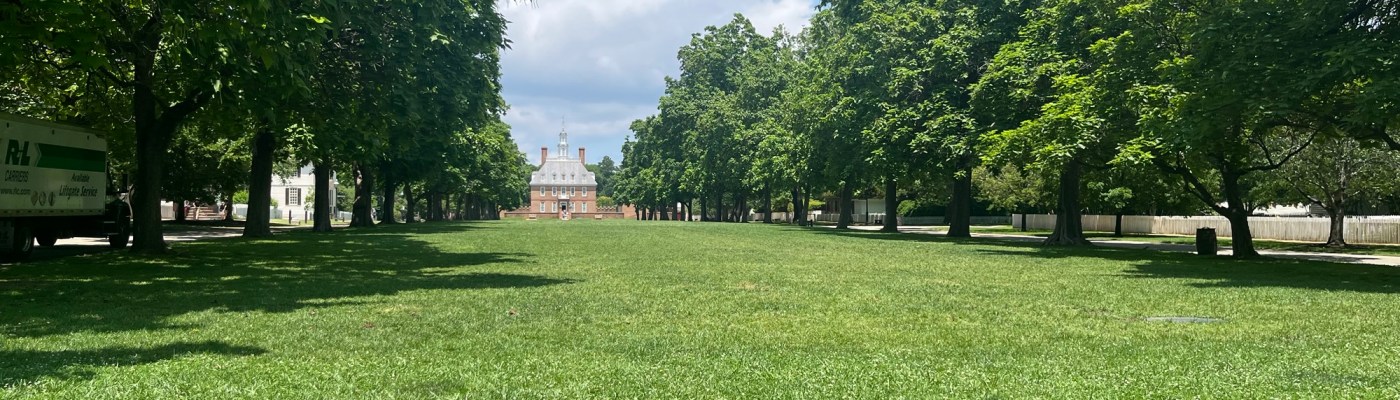
P.S. This post image is also from Colonial Williamsburg VA. I love visiting there!
If you are not 100% sure that you’ll go to Heaven when you die, now is the time to repent and put your trust in Jesus Christ. If you have any questions or doubts about your salvation, click here to learn how you can be saved!
Let me know if you have any comments or suggestions below or you can contact me here! I love hearing from you!
Discover more from Back To Stable Hill
Subscribe to get the latest posts sent to your email.

