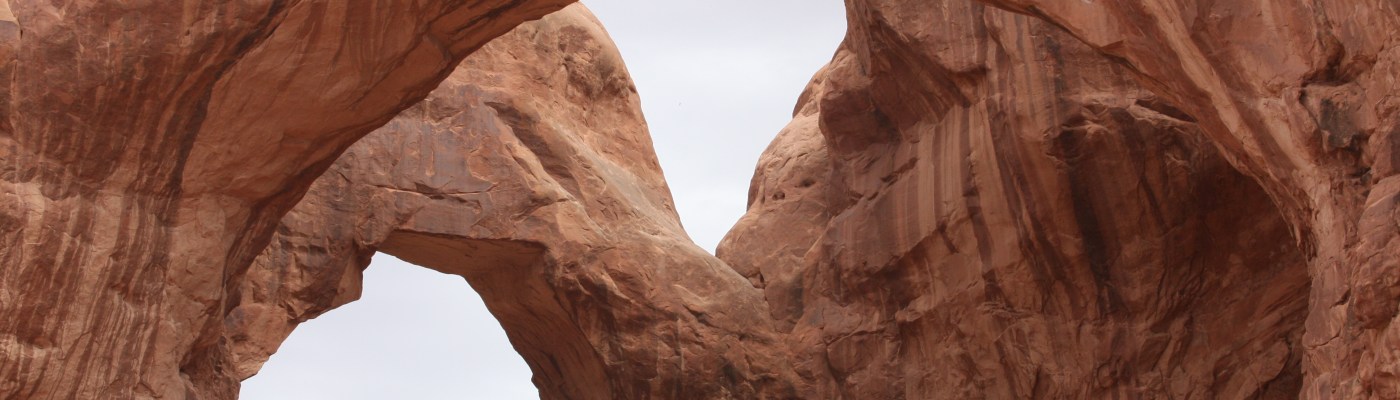
Last week, I told you about the beginning of our trip through Canyonlands National Park. The day after visiting the Island in the Sky, we were up early and ready to go to Arches. We were glad we got up early, because Arches was very busy. As much as I dislike crowds, I loved Arches, and I would definitely go again, even with a crowd.
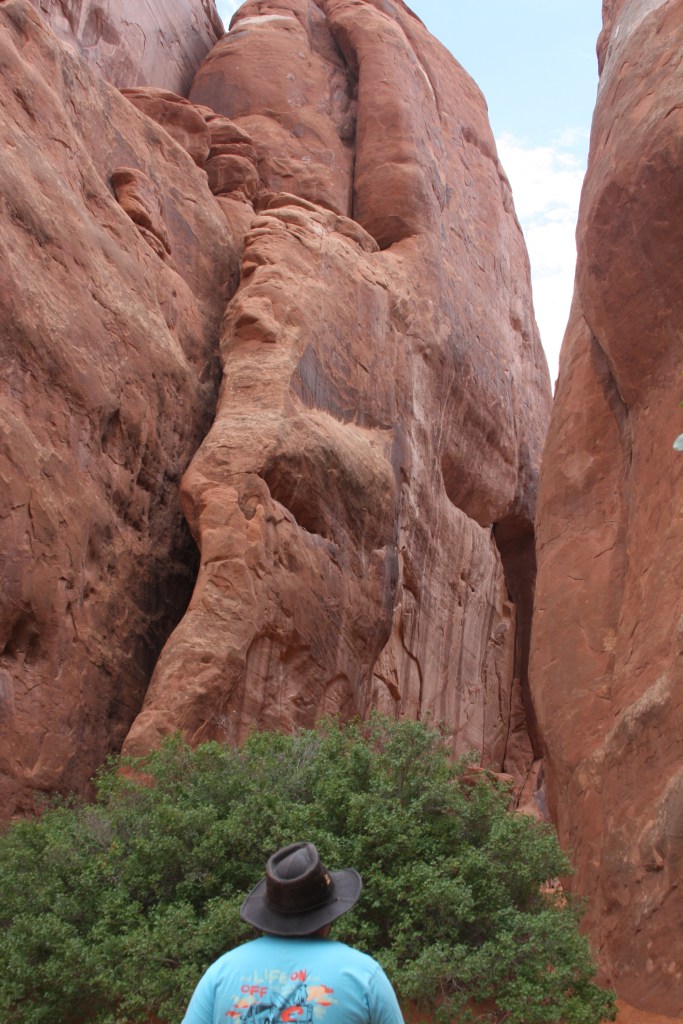
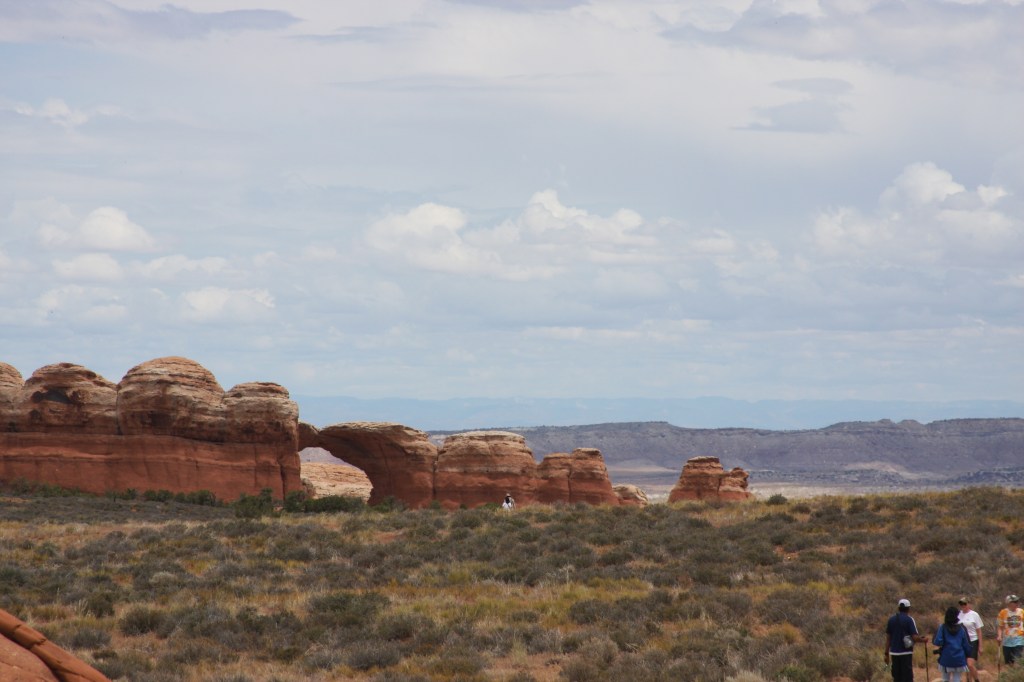
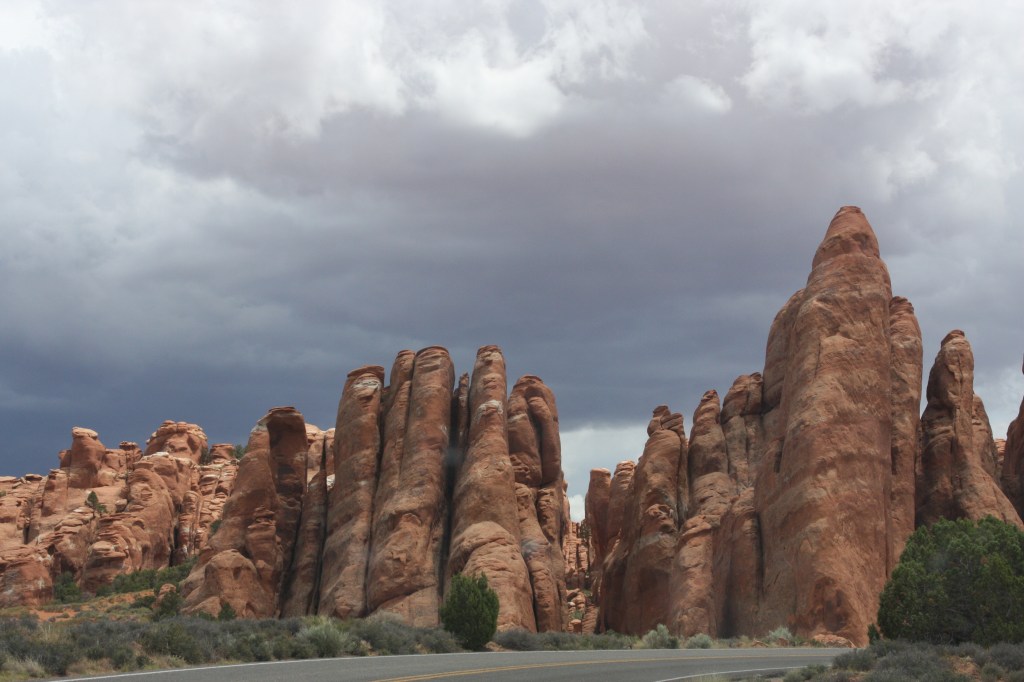
Much like Canyonlands, Arches didn’t look real. We got to see the land from below, unlike Canyonlands, which let you look from above. Matt loved Double Arch (I did, too). I really liked Sand Dune Arch, which was tucked back in a canyon, and covered with, you guessed it, sand (so much so, that I didn’t even get a picture of it!). Come to think of it, I’m not sure I didn’t like any of the arches!
But, how are the arches formed? The National Park Service explains it like this (1):
The story of Arches begins roughly 65 million years ago. At that time, the area was a dry seabed spreading from horizon to horizon. If you stood in Devils Garden then, the striking red rock features we see today would have been buried thousands of feet below you, raw material as yet uncarved. Then the landscape slowly began to change.
First, geologic forces wrinkled and folded the buried sandstone, as if it were a giant rug and someone gathered two edges towards each other, making lumps across the middle called Anticlines. As the sandstone warped, fractures tore through it, establishing the patterns for rock sculptures of the future.
Next, the entire region began to rise, climbing from sea level to thousands of feet in elevation. What goes up must come down, and the forces of erosion carved layer after layer of rock away. Once exposed, deeply buried sandstone layers rebounded and expanded, like a sponge expands after it’s squeezed (though not quite so quickly). This created even more fractures, each one a pathway for water to seep into the rock and further break it down.
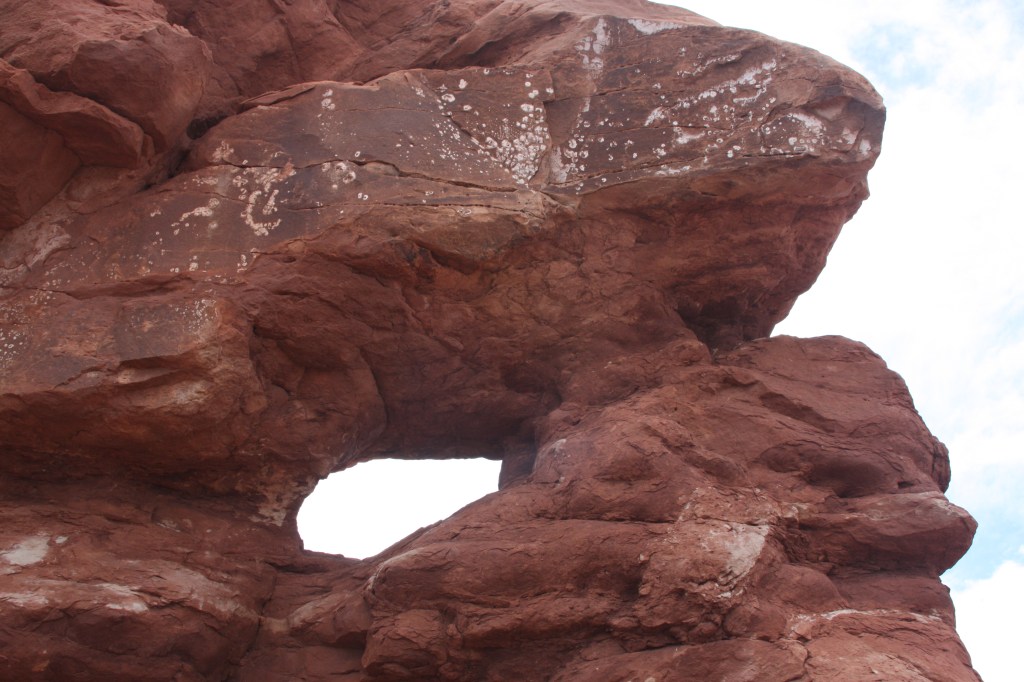
Today, water shapes this environment more than any other force. Rain erodes the rock and carries sediment down washes and canyons to the Colorado River. Desert varnish appears where water cascades off cliffs. In winter, snowmelt pools in fractures and other cavities, then freezes and expands, breaking off chunks of sandstone. Small recesses develop and grow bigger with each storm. Little by little, this process turns fractured rock layers into fins, and fins into arches. Arches also emerge when potholes near cliff edges grow deeper and deeper until they wear through the cliff wall below them. In addition to grand arches, water dissolves small honeycomb formations called tafoni.
There are a couple of questions that rise from that explanation. If the entire region of Arches was lifted, then why weren’t flat plains left behind by erosion instead of rocky outcrops and arches that we see? Also, since when does erosion carve parallel fins? We don’t see that in nature.
Now, sandstone does erode slowly by rain, but what’s below the arches is not the enormous piles of sand that eons and millions of years of rain based erosion would have left behind. Also, erosion happens much faster when boulders collapse, and we do not have the rock piles that we would expect from millions of years. If you go to the park, and investigate the different arches, you’ll find rubble beneath Double Arch, and Landscape arch, which has been slowly and consistently breaking apart. Delicate Arch has no rubble at it’s base, and it is at one of the highest elevations in the park. Where did that rubble go? If we’re expecting the slow rates of erosion for millions of years, the ground should be covered in rubble. But it’s not.
We’re missing a few crucial pieces to this puzzle.
Now, there could have been a point in time where a lot of water came through and washed away all of those sedimentary layers.
A science experiment also disproves the NPS’ theory, much like last week.
The top of a block of sand was weighted, and it was wet enough to stick together, but it hadn’t yet cemented into stone (which is how you get sandstone). The water level was raised around the sand block, and as the sand fell away, pillars, arches, and alcoves were formed quickly, in minutes. Not over eons of time. Sand grains lock together under pressure, and you can look at how the rubble under Landscape Arch for example disintegrates, turning back into sand when there is no more pressure.
Arches is a testament to the draining of water from a global flood. As the floodwaters receded, crustal movements lifted the land, fracturing sandstone into parallel fins. The weight of the strata above the sandstone solidified as the waters partially submerged it, forming the pillars, arches, and mesas that we see today. The waters moved the remaining debris and sand towards the sea, leaving alcoves, arches, buttes, and valleys as evidence.
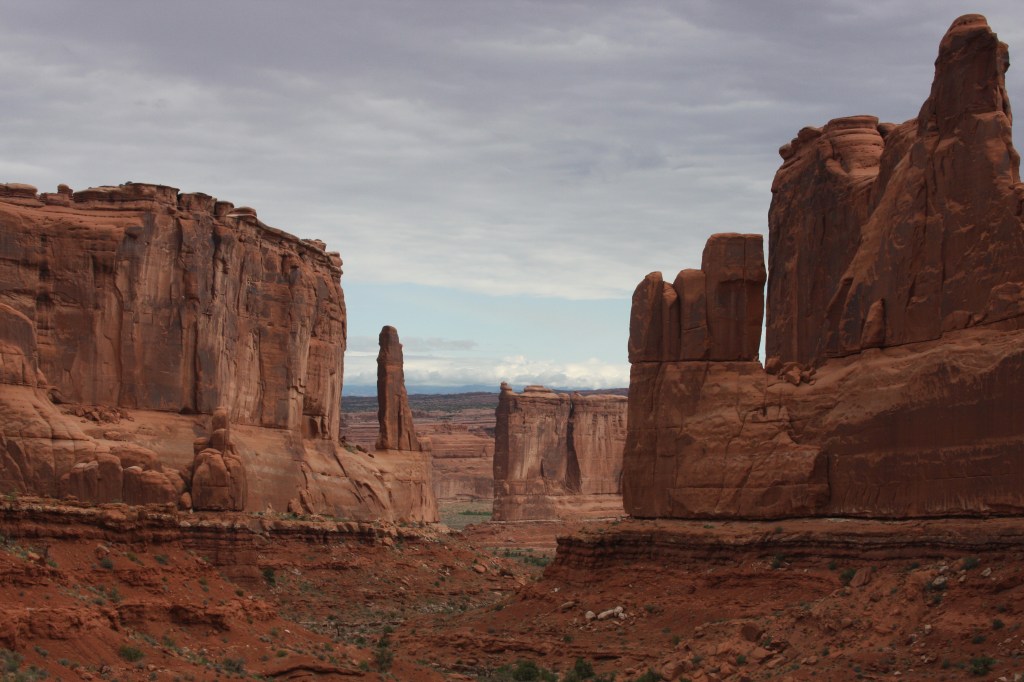
Nature and science, once again, prove the existence of a global flood. Next week, we’ll continue our trip through Monument Valley, but for now, here are some pictures from our trip!

If you are not 100% sure that you’ll go to Heaven when you die, now is the time to repent and put your trust in Jesus Christ. If you have any questions or doubts about your salvation, click here to learn how you can be saved!
Let me know if you have any comments or suggestions below or you can contact me here! I love hearing from you!
Resources:
- Arches National Park Service. Geologic Formations. https://www.nps.gov/arch/learn/nature/geologicformations.htm
- Thomas, B. & Clarey, T. (2021). Arches National Park: Sculptures from the Flood. https://www.icr.org/article/arches-national-park-sculptures-from-the-flood
All images taken by me – except the one of both of us at Double Arch, Matt took that one 🙂
Discover more from Back To Stable Hill
Subscribe to get the latest posts sent to your email.

